Five layers for a husky ride in Lapland
Daytime air around Rovaniemi in winter often sits between −10 and −20 °C (14 and −4 °F), and the sled adds its own wind. The tours lend you the outer shell, but what goes underneath is your job. Get the layers right and you will notice the dogs instead of your fingers.
How cold it gets on the sled
A winter day around Rovaniemi is commonly somewhere between −10 and −20 °C (14 and −4 °F). Clear nights drop lower, and a cold snap can push the daytime figure well below that range.
On a sled the air feels colder than the thermometer says. Whether you sit or stand, the dogs' steady pace keeps you in a moving breeze for the whole ride. A driver also works the brake with hands that barely move.
Snow and temperatures change from week to week, and neither is guaranteed. Our guide to the best months for huskies in Rovaniemi covers what each part of winter tends to bring.
What the tours lend you
Every tour on this site supplies an outer layer, but the details differ. The gaps are what you need to fill. Check the listing for the tour you book, because the small items are the ones that catch people out.
| Tour | From | Lent by the tour | Bring yourself |
|---|---|---|---|
| Apukka 6 km self-drive | ~$245 | Thermal overall, thermal boots, wool socks, mittens | Base layers, hat, liner gloves |
| A Day In Lapland safari | ~$245 | Overalls and boots | Base layers, hat, warm gloves, wool socks |
| Safartica daytime safari | ~$211 | Winter clothing (items not listed) | Base layers, hat, gloves |
| Bearhill ride | ~$70 | Arctic outer clothing | Base layers, hat, gloves |
| Husky and reindeer combo | ~$221 | Winter clothes, helmet, balaclava | Base layers, liner gloves |
A Day In Lapland is the one to watch. Its overalls and boots are included. Hats and gloves are not, and neither are socks, so pack warm ones of your own.
Five layers, from skin outwards
- Base layer of merino wool or a synthetic fabric for top and bottom, snug without squeezing
- Mid layer such as a fleece or a thin wool sweater, with fleece trousers on the coldest days
- The lent overall on top, zipped up to the chin before the sled moves
- A warm hat that fits under the hood; add a scarf or neck gaiter for your face
- Thin liner gloves inside the mittens, so a photo never means bare skin
Several thin layers are easier to adjust than one thick sweater. If you get too warm in the minibus, open the overall rather than taking a layer off, because you will want everything once the dogs start running.
Why cotton stays at the hotel
Cotton holds sweat and dries slowly, and damp fabric pulls heat from your skin. Jeans under an overall feel fine in the hotel lobby and cold within twenty minutes on the trail.
The same goes for cotton socks. One good pair of wool socks beats two thin pairs squeezed into a boot, because tight socks slow the blood that keeps your toes warm.
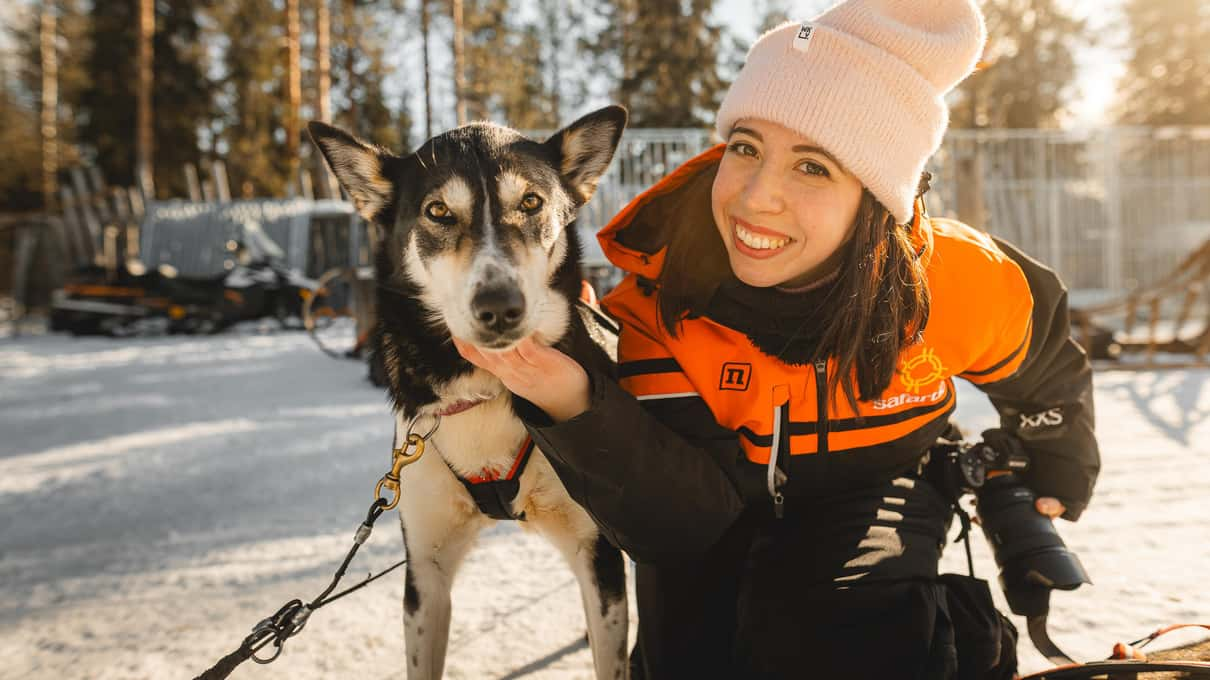
Hands, feet and face
Hands get cold first, especially for the driver gripping the handlebar. Mittens beat gloves in deep cold because the fingers warm each other, and a thin liner underneath lets you work a zip or a camera.
Boots lent by the tours tend to be big and insulated, so one pair of thick wool socks is enough. If your toes go numb, wiggle them, then tell the guide at the next stop rather than waiting for the end.
Your face is the only part left open, and the wind finds it. A neck gaiter pulled up over the nose helps a lot. Ski goggles are optional but welcome when snow kicks up from the dogs' paws.
A long day with every layer lent
Arctic Circle Snowmobile Park lends winter clothes plus a helmet and balaclava for the shared snowmobile ride, from ~$221. Over six hours you meet huskies and reindeer, with a 500 m sleigh ride behind each, so expect a sampler. It scores 4.6 from 1,200+ reviews on GetYourGuide.
Phones and cameras in the cold
Phone batteries drain fast in deep cold, and some phones switch off with plenty of charge left. Keep yours in an inside pocket close to your body and bring it out only for the shot you want.
A small power bank in the same pocket helps on long days. Drivers should not hold a phone at all, since both hands belong on the sled, so take pictures at a stop or after you swap with your partner.
Glasses can fog when you breathe into a scarf. Contact lenses help, and so does a gaiter worn just below the nose instead of over it. Anti-fog wipes from an outdoor shop are a cheap fix for a long day.
Checklist for the morning
- Wool or synthetic base layer for top and bottom
- Fleece or wool mid layer
- Warm hat that fits under a hood
- Thin liner gloves, plus warm gloves of your own for A Day In Lapland
- One pair of thick wool socks
- Neck gaiter or scarf
- Phone in an inside pocket, power bank optional
Children feel the cold faster than adults and tend to say so late. Our guide to husky sledding with kids in Rovaniemi covers how the tours handle young passengers.
Ride length decides how long you sit still in the wind. How long the ride lasts compares the tours, from a 7–12 minute taster to a safari of 30–50 minutes.
If you are still choosing, the cost guide shows which prices include clothing and transfers. Once you arrive, how to spot a well-run husky farm helps you read the kennel yard.