Is a Rovaniemi husky farm treating its dogs well?
Most visitors meet the dogs a few minutes before they drive them, so it helps to know what to look at. A good kennel shows itself in small things you can see from the yard. This guide covers those signs and what the Rovaniemi listings promise, with a few questions to ask before you book.
Which dogs pull the sleds
Most sled dogs around Rovaniemi are Alaskan huskies, a working mix bred for running rather than for looks. They tend to be leaner than the fluffy blue-eyed dog on the postcards, and their coats vary a lot from one dog to the next.
Some kennels also keep Siberian huskies, the older registered breed. A yard full of lean, mixed-looking dogs is no sign of cut corners. Those dogs are usually the athletes the sport grew up around, and a good guide is glad to explain the difference.
Safartica, for one, says on its listing that its kennel keeps Alaskan huskies. Other operators rarely name the breed, so ask at the yard if you are curious.
What rested, willing dogs look like
The loudest moment at any kennel comes just before a team sets off. Huskies bark and leap in harness because they want to run, and that noise is a good sign rather than a distressed one.
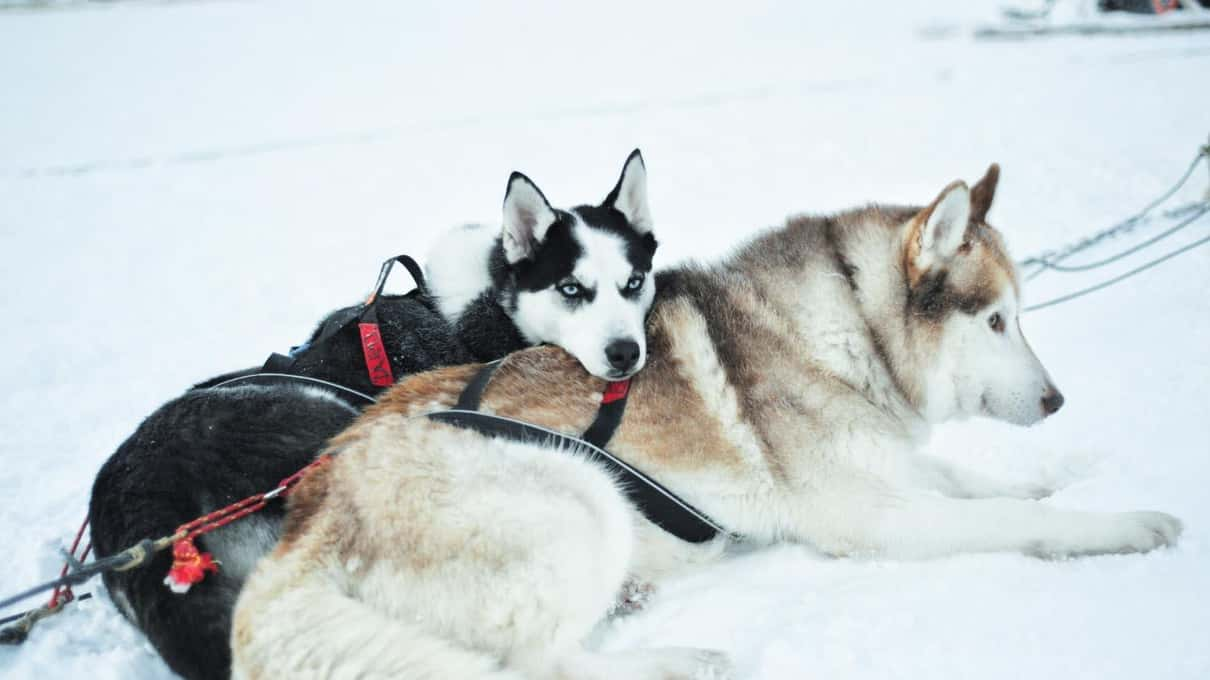
Watch the dogs that are not working. Resting dogs should look relaxed and have room to move plus shelter from the wind. A dog that cowers from people or stays hunched in a corner deserves a quiet question to the guide.
After the run, a well-kept team usually flops into the snow for a minute and then comes looking for attention. Dogs that push their heads into your hands are used to kind handling.
Even loads and weight limits
A sled that is too heavy wears the team out and slows every sled behind it. Apukka's 6 km self-drive safari says on its listing that sleds are balanced so every team pulls an even load. It also caps each sled at 250 kg (about 550 lb), passengers included.
That limit sits alongside a cap of two adults and up to three children per sled. Rules like these can feel fussy when you book, but they are the dogs' side of the deal.
Other operators publish their own rules. A Day In Lapland puts two guests on each sled, and they swap driver and passenger halfway. If a listing says nothing about weight, ask before you book, especially for a heavier pair.
Certificates and what they cover
Apukka's listing says it holds the Green Activities certificate, whose criteria include animal welfare. That means the kennel has been checked against a written standard rather than only its own promises.
A certificate is a useful starting point, not proof of every detail on every day. Smaller farms may run their kennels just as carefully without one, so treat the label as one sign among several and use your own eyes at the yard.
Guides who talk about each dog
One of the clearest signs of a good kennel is a guide who knows the team by name. Ask who runs at the front and why, or which dog is the youngest, and listen to how the answer sounds.
Musher talk should be specific. Someone who can tell you that one dog is a strong puller and another is shy with strangers spends time with them every day. A vague answer proves nothing bad, but a detailed one is reassuring.
Time with the dogs after the run is part of the same picture. Apukka includes petting the dogs, and its reviews mention puppies after the ride. Safartica's daytime safari ends with facts and stories at the kennel once the 5 km loop is over.
A small farm with time by the fire
A Day In Lapland takes no more than 8 guests to its wilderness husky farm, from ~$245. You drive 6–10 km in about 30–50 minutes, then sit in a kota with hot drinks and grilled sausages. It scores 4.9 from 220+ reviews on GetYourGuide.
Warning signs to raise with the guide
No single moment tells the whole story, and a busy yard on a peak morning can look chaotic. Still, a few things deserve a polite question on the spot or in a message to the operator later.
- Dogs that look thin or lame, or flinch when a handler walks past
- Teams sent out again and again with no visible rest between runs
- Sleds loaded well past the stated passenger limit
- Guides who cannot say anything about the dogs they are harnessing
- Dogs kept on short chains with no shelter from the wind
If something bothers you, describe what you saw in a review rather than guessing at the cause. Reviews are read by the next visitors and by the operators, and a precise one does more good than an angry one.
Remember that a few minutes at a yard are a snapshot. A dog limping after a fall on the ice may already be on its way to the vet. Ask first and judge afterwards.
How welfare fits with your booking
Group size affects the dogs as well as you. A small group means fewer teams waiting in harness at the start, which our guide to small-group husky safaris covers in more detail.
Ride length is a different question. Bearhill's ride at Santa Claus Village covers 2.5 km in 7–12 minutes, while A Day In Lapland's safari runs 6–10 km. Our guide to ride distances compares what each tour puts you on the sled for.
If you plan to drive, read whether to drive your own team or ride along first. A calm driver who brakes gently on downhills makes the dogs' work easier, and the guides notice.
Prices for every option sit in what a Rovaniemi husky safari costs. A higher price does not guarantee better care, so weigh the signs on this page alongside the number.