Huskies and northern lights on one Rovaniemi trip
Many people come to Rovaniemi hoping for both a husky ride and the northern lights. The two need different conditions, so they usually work best as separate outings. Plan a daytime safari and keep your evenings free for the sky.
What the aurora needs
The northern lights appear when solar activity meets a dark, clear sky. Rovaniemi lies in a good zone for them, but no tour can promise a show on any given night.
Darkness comes easily here. From about September to March the nights are long, and in midwinter it is dark for most of the day. The harder part is a clear sky.
Clouds are the usual reason for a blank night. A strong display behind thick cloud is invisible from the ground, so the weather forecast matters as much as the aurora forecast.
Why we split day and night
A husky safari is best in daylight or bright twilight. You see the dogs working and the forest around you, and the musher can read the conditions. Photos come out sharp, and the cold feels easier with a bit of sun.
Aurora hunting needs the opposite. You want the darkest spot you can reach, away from town lights. You also want the freedom to wait, or to move when clouds drift in.
Putting both into one booking means compromising on each. A separate daytime safari and an evening aurora outing give you the best odds for both.
A daytime safari that ends by a fire
For the day part, A Day In Lapland's small-group safari from ~$245 is a strong fit. It holds 4.9 from 220+ reviews on GetYourGuide, with groups capped at eight.
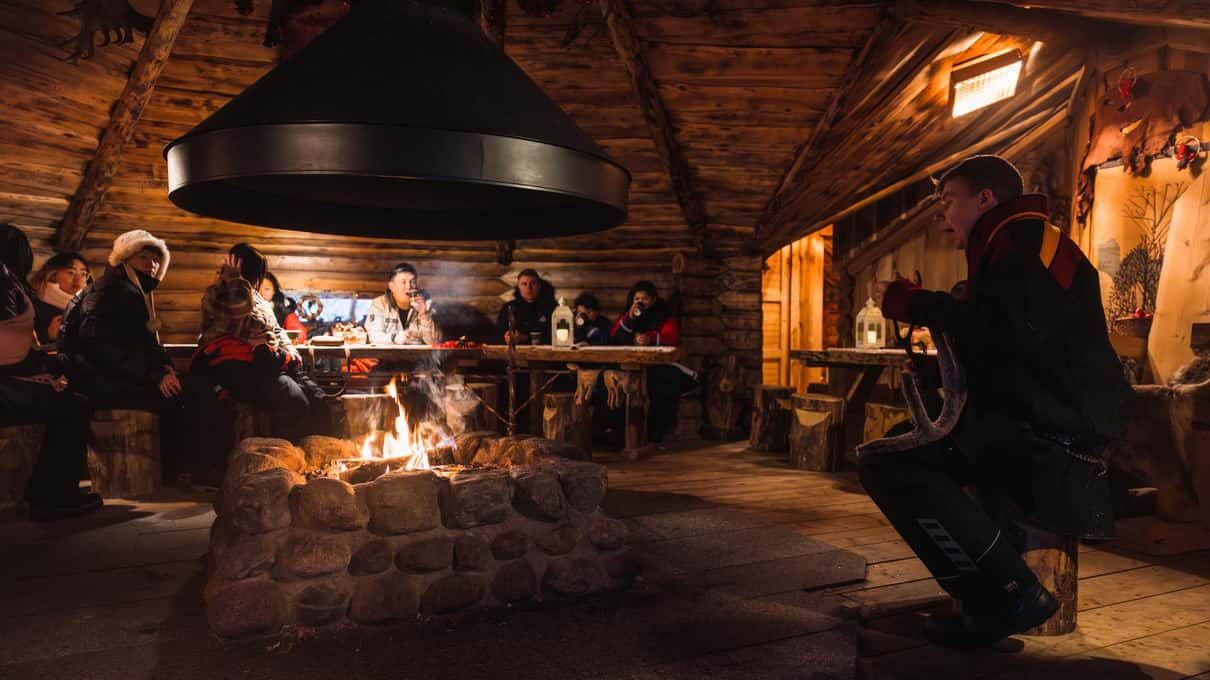
You drive 6–10 km (4–6 miles) through the forest in about 30–50 minutes, two guests per sled with a swap halfway. Only adults 18 and over drive. Afterwards you warm up with hot drinks and grilled sausages in a kota.
A small group for the daylight half of your trip
The four-hour tour includes transfers along with overalls and boots, so you are back in town with your evening free for the sky. Pack your own hat and gloves. The listing does not supply socks either. From ~$245.
It is a smaller company with fewer reviews than the big farms. Our guide to small-group safaris weighs that against the larger tours.
Night husky safaris
Both GetYourGuide and Viator list night husky rides around Rovaniemi. The idea is appealing, with dogs running under the stars and a chance of the lights overhead.
The ones we looked at score noticeably lower than the daytime safaris on this site. Some are sleigh rides rather than husky runs, so read the listing title with care.
On a cloudy night you get a dark forest ride with little to see. If the aurora matters most to you, a dedicated night tour that can chase clear skies gives better odds than a fixed husky route.
A chance of lights by the kota fire
Late afternoon safaris in midwinter often finish in the dark. If the sky is clear and the lights are active, you might glimpse them from the farm while warming up by the fire.
Treat that as a bonus, not the plan. A farm yard has lamps, and the tour schedule will not wait for a faint glow to grow brighter.
Reading the sky on the day
Two forecasts help on an aurora evening. One shows expected activity, the other shows cloud cover hour by hour. A modest activity level under a clear sky beats a strong one under cloud.
Clouds often break up or roll in within an hour, and they can differ a lot from one side of town to the other. That is why aurora tours that drive around tend to do better than a single fixed spot.
If you hunt on your own, walk away from street lights and give your eyes about 15 minutes to adjust. A faint aurora can look grey to the eye and green on a phone camera, so take a test shot.
Sleep and cold across two outings
Aurora nights often run past midnight, and the best displays can come late. After a 1 am return, a dawn pickup for a safari leaves you tired and cold on the sled.
Put the husky safari before the aurora night, or leave a lazy morning between them. A rested body copes far better with −15 °C (5 °F) and the wind from a moving sled.
Layering for both is similar, though you stand still for hours on an aurora night. Our clothing guide covers what to wear under the lent overalls.
Book the safari early in your stay and keep two or three evenings open for the sky. More nights mean more chances for a clear one.
Which months suit both
Snow for the sleds usually arrives around December and lasts into March, while dark skies run from about September. The overlap from December to March is when both are possible on one trip. Neither snow nor a clear night is ever guaranteed, so a longer stay gives you more room.
March brings milder air and longer days for the sled, with still plenty of dark hours at night. Our page on the best months for huskies goes through each month, and our price comparison helps you budget for two outings.